What usually turns out to be unpermitted
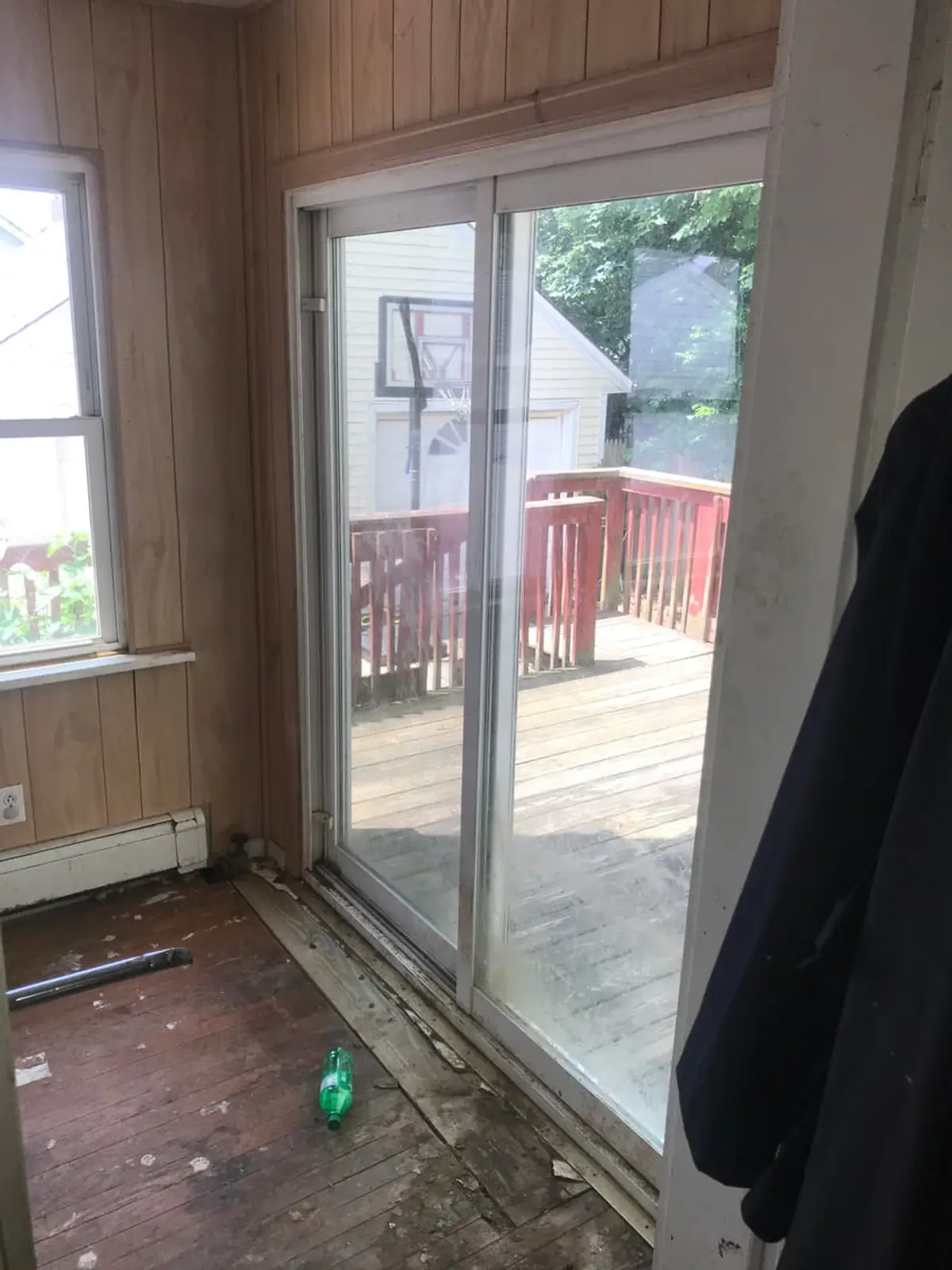
The list barely changes from house to house. Finished basements, rear decks, dormers, a garage turned into a bedroom, a sunroom off the kitchen, a second kitchen put in for a relative who moved in years ago.
Most of it was built competently by people who knew what they were doing. It simply never went through the building department, and the work stays unpermitted no matter how well it was built or how long ago it happened.
What we bring to unpermitted work, beyond the money
Most owners get here after one call to the building department that raised more questions than it answered. What we can offer first is somebody who has been through this repeatedly telling you plainly what your options are.
If selling suits you, we buy with the unpermitted work in place. If the addition could be legalized without much trouble and the house would net more legalized and listed, we will say so and give you the name of an expeditor. Neither conversation costs you anything.
What this looks like in Oceanside specifically
Oceanside is roughly 32,637 people in Nassau County, ZIP 11572, and the housing stock is mostly cape cod, hi-ranch, colonial. Around Long Beach Road and Oceanside Road, most of it is old enough that the mechanicals are on their second or third life. The Oceanside stop pulls buyers who commute, which supports the good houses and does very little for the ones that need a roof. We have been buying across Nassau County for 15+ years. We know what the Oceanside Union Free School District does to a resale price, which blocks still have oil tanks in the ground, and what a house like yours is actually worth here.
The Oceanside median has barely moved year over year as of 2026-10, at -0.37%. Flat is the hardest market to price a fixer into, because there is no upward drift to cover a mistake and no urgency pushing buyers to overlook a problem. A $769,606 median puts Oceanside in the band where buyers are stretching to afford the house and have nothing left for the roof. That is precisely the buyer who walks away from a property needing work, and it is why condition matters more here than the price alone suggests. The median house here goes under contract in about 30 days, which is quick for Long Island. It is also a figure that only applies to property in showable condition.
Appraisals, unpermitted square footage and the certificate of occupancy
Two separate parties care, which is what makes this harder than people expect. The lender wants the value it is lending against to be real and legal. The title company wants the buyer to take the property without open items attached to it.
An open permit or a missing sign-off can show up as an exception on a title report, and work done off the books has a way of producing both at once. Satisfying one of them is manageable. Satisfying both on a contract timeline is where sellers come unstuck.
Why legalizing unpermitted work takes longer than anyone expects
Ask an attorney or an expeditor before you assume anything, in either direction. We have seen owners spend months chasing approvals they were never going to get, and we have seen others avoid selling for years over something that would have been permitted in a season.
The only way to know which one you have is to put the file in front of somebody who works with that department regularly. We are glad to tell you who we would call in Oceanside, and there is nothing owed to us for it.
What the two paths cost in Oceanside
These are the two routes open to you with a house with unpermitted work, priced against what Oceanside houses actually sell for.
Work it against Oceanside's own numbers. The median sale here is $769,606. A 5% commission on that is $38,480, and seller closing costs of about 2% add roughly $15,392. Those are costs we can cover on our side. That is $53,872 gone before anyone counts the repairs it took to get the house listable.
There are two waits in a listed sale and people usually only count the first. In Oceanside the median house takes about 30 days to go from listed to a signed contract. Then it waits again, typically 45 to 60 days, while the buyer's lender orders an appraisal and underwrites the loan. Call it 75 to 90 days from sign to keys, assuming nothing goes wrong.
The part worth understanding is what a signed contract actually guarantees, which is less than most sellers assume. A retail buyer with a mortgage contingency can walk away right up to the end. If they do not qualify, if the appraisal comes in under the price, if they change their mind and let the financing lapse. A share of deals die exactly there, after months of waiting, and the house goes back on the market with time on it. We are not borrowing anything, so there is no lender to satisfy, no appraisal to come in low and no contingency to exercise.
| Listing with an agent | Selling to us | |
|---|---|---|
| Sale price | $769,606 (Oceanside median) | Our written offer |
| Commission | −$38,480 | None |
| Seller closing costs | −$15,392 | We can cover them |
| Repairs before listing | Out of pocket | None |
| Cleanout | Yours | Ours |
| Showings | Until it sells | One visit |
| Listed to signed contract | 30 days (Oceanside median, once listable) | 24 hours to a written offer |
| Contract to closing | 45 to 60 days (waiting on the buyer's lender) | A date you choose |
| Total wait | 75 to 90 days if nothing falls through | Yours to set |
| Can the buyer walk? | Yes (mortgage contingency runs to the end) | No financing to fall through |
| Before repairs and carrying | $715,734 | The number we put in writing |
The listing column assumes a 5% commission and seller closing costs of about 2%. Both vary. We have not subtracted repairs or the cost of carrying the house while it sits, because those depend on the property. A house in good condition listed with a good agent can absolutely beat a cash offer, and we will say so if that is your situation.
Which route nets more when the work was never permitted
Sometimes legalizing first is genuinely the better move, and we will tell you when we think so. A deck that needs a permit and an inspection is a different proposition than a garage conversion the zoning may never allow.
The calculation turns on what has to be spent before anything is recovered. Permit costs, drawings, the corrective work an inspector asks for, and the months the house carries while all of it happens. A cash sale frequently wins on the net rather than on the headline number.
How we arrive at a number on a house with unpermitted work
For a house with unpermitted work, the starting point is the price once it is fully repaired. We subtract what the repairs cost and then a margin for being wrong about the price or the repairs. No algorithm and no trade secret: that is how the number is built.
- What it is worth repaired. Not the Oceanside median of $769,606 on its own, but what houses like yours on your street actually closed at recently.
- What the work costs. Roof, boiler, electric, the kitchen and bath. In Oceanside the stock is largely cape cod and hi-ranch, and on houses that age the mechanicals are usually the expensive part rather than the cosmetics.
- How long we will hold it. The median Oceanside house goes under contract in about 30 days once it is showable, then waits 45 to 60 days more on the buyer's lender. Ours has to get to showable first, and we carry taxes and insurance across the whole of it.
- What we are wrong about. Every renovation turns up something nobody could see on the walk-through. We build that risk into the price, and it explains a good part of why cash offers come in below retail.
Where our margin actually comes from
Plainly, because buyers are often vague here: we run millions of dollars of construction a year. At that volume we pay contractor prices for materials and keep steady crews working twelve months a year, so a given renovation costs us roughly half of what a homeowner pays for the same job.
That is where our margin is. It is also why fixing the house up yourself first rarely pays off. You would be paying retail for the work and counting on the sale price to cover it, and it usually does not. We earn our money on the construction side, not on the price we pay you.
If the figure does not work, say so; we would rather know than try to talk you round. We will look at what is going on and tell you honestly which options make sense, including the ones without us. Listing with an agent is the better route for plenty of sellers, and we will tell you if it is yours.
No permit has to be pulled before you sell
The next step is short. Tell us what was built and roughly when, send whatever the town has sent you, we come out once, and you get a written number within a day.
No permits, no drawings, no cleanout, and no sign on the lawn in Oceanside. If what we see suggests the work could be legalized easily enough that you would net more that way, we will tell you so and give you the name of the expeditor we would use.
Common questions
Will unpermitted work stop a buyer getting a mortgage on an Oceanside house?
It often does. A lender wants the certificate of occupancy to match what is physically there, and unpermitted work means it does not. The appraiser flags the discrepancy, the underwriter asks for the permit, and the buyer is suddenly waiting on a town approval nobody can put a date on. That is the mechanism behind most failed sales on houses with unpermitted work. We are not borrowing, so there is no appraiser and no underwriter to satisfy.
Do I have to pull permits before selling my Oceanside house?
No. Pulling permits after the fact is slow and expensive, and it is work we are already set up to do. Spending your own money and months on it before you have an offer in hand rarely makes sense.
The previous owner did the unpermitted work. Does that change anything?
Not for us, and not for the town either, because the file follows the property rather than the person who built the addition. It is one of the most common versions of this we see.
Will the town find the unpermitted work when I sell my Oceanside house?
What the town knows and when is not something anyone should guess at. Your attorney can tell you what a sale in your situation actually triggers. From our side, nothing you disclose changes our offer.
There is already a violation for the unpermitted work. Can you still buy?
Yes. An open violation on unpermitted work is a file we take on at closing along with the house. It affects the number the way any real cost does, not the willingness.
How much does unpermitted work take off the price of an Oceanside house?
Enough to cover what it realistically costs to put right, and no more than that. We will show you how we arrived at the figure, and we do not move it afterward.